



On Tuesday, June 9, 2026, the Trump-aligned group Citizens for Sanity announced a six-figure ad buy in Texas. The ad in question features an AI-generated facsimile of James Talarico, wearing a dress and singing a parody of the Sound of Music classic “My Favorite Things,” in which he praises gender transitions for minors.

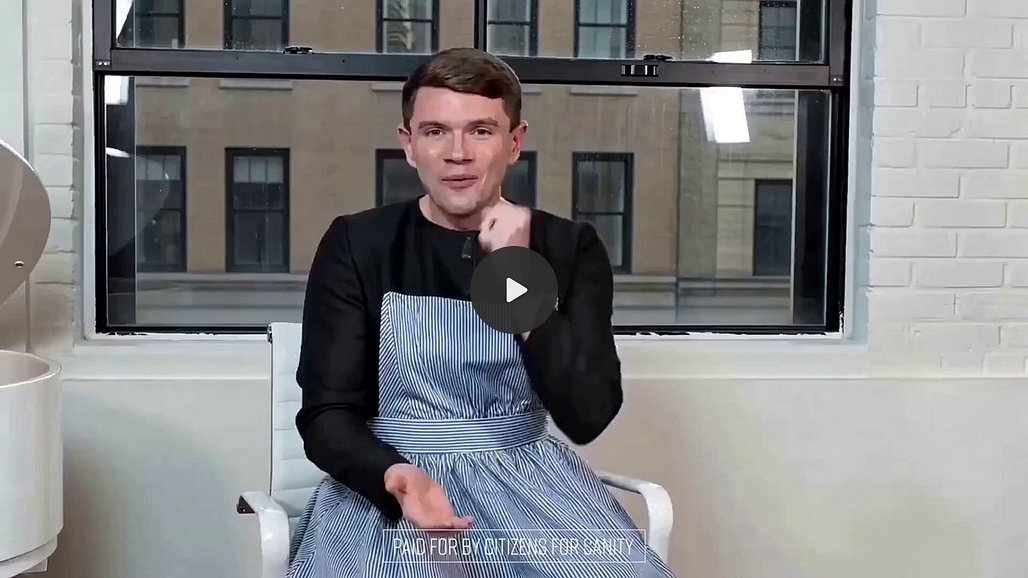
This ad comes on the heels of the California gubernatorial primary, in which candidate Spencer Pratt grew to public prominence in part due to widely shared AI-generated videos featuring himself and his opponents, often in scenes inspired by comic books. While many of these videos were created by fans, rather than the Pratt campaign, Pratt did share many of them on his social media pages. And last year, in the highly anticipated mayoral race in New York City, Andrew Cuomo drew widespread criticism for his AI-created campaign ads featuring Mayor Zohran Mamdani.
Artificial intelligence is changing the game when it comes to political campaigning, and more than half of campaign consultants say they use AI regularly. But campaigns should be careful how they use it: there’s a growing body of evidence to suggest that far from promoting your desired candidate, this kind of campaign advertising might backfire.
Americans don’t trust AI – and states are responding
Americans are deeply skeptical of artificial intelligence, generally. In a Siena University/The New York Times survey (May 11 - 15, 2026), just 16 percent of registered voters said that AI is “mostly good,” while 35 percent said it is “mostly bad,” 45 percent said “neither good nor bad,” and the rest were unsure. Democrats are slightly more skeptical than the public overall, with 14 percent saying mostly good and 42 percent saying mostly bad. Republicans, on the other hand, are a bit less skeptical than Americans generally, with 22 percent saying AI is mostly good, and 27 percent saying mostly bad.
Asked about the impact of AI on society today, just 10 percent said it has a positive impact in a Reuters/Ipsos poll (May 15 - 18, 2026). A global survey from Baringo reported that worldwide, 70 percent of people are uncomfortable with AI-generated media. And when it comes to political campaigns, Americans have deep concerns. According to a Marist University survey (Mar. 2 - 4, 2026), 85 percent of Americans think that AI-generated political content will spread misinformation related to the upcoming midterms.
Against that backdrop, at least 29 states have enacted laws either prohibiting or restricting the use of artificial intelligence in campaign ads, according to the National Conference of State Legislatures. (This, of course, means that 21 states have NOT restricted the use of AI in campaign materials). However, in many cases these restrictions don’t kick in until 60 or 90 days prior to the election, so for now, it’s a free-for-all.
In most states with AI campaign laws, the restrictions only require that ads depicting a candidate doing or saying something they did not do or say need to be labeled as manipulated or AI-generated. Moreover, in much of the legislation, the restrictions only apply if the media being generated is intended to harm or injure a candidate, making legal enforcement tricky. Pratt, for example, generated AI videos for his campaign without labeling them as such, but if they weren’t “intended to harm a candidate or deceive voters into voting for or against a candidate,” then a disclosure is not required under California law. (We have yet to see if Pratt’s use of AI will be challenged by state authorities.)
A majority of campaign consultants are using AI at work
Despite state restrictions and distrust, campaign operatives are still turning to AI. In a survey of campaign consultants conducted by the American Association of Political Consultants this year, 59 percent of consultants said that they used AI at least weekly in their work, including over a third who said they use it daily. However, most are not using the technology to create ads: just 15 percent say that generating creative content has been a valuable use of AI.
Like most Americans, campaign consults have concerns about the ways that AI can mislead voters. Sixty-five percent of campaign consultants said that the use of deep fakes was among their top three concerns about AI in political campaigns, and 60 percent said that the spread of misinformation/disinformation was in their top 3 concerns.
But as with the general population, slight partisan differences are apparent in how campaign consultants think about artificial intelligence. Twenty percent of Republican consultants said that using AI to produce a campaign ad from beginning to end without disclosing that to the public would be an ethical use of AI; just 11 percent of Democratic consultants and 6 percent of nonpartisan consultants said the same. For AI-generated ads with disclosure, the partisan differences are even stronger: 68 percent of GOP-aligned consultants said that would be an ethical use of the technology, compared to 56 percent of Dem-aligned and 41 percent of nonpartisan consultants.
AI-generated campaign ads might backfire with voters
The AAPC also has research suggesting that synthetic campaign ads might ultimately backfire. In a study from the AAPC Foundation, researchers added AI disclaimers to a variety of videos, some real and some fake, to test how voters responded.
When a video included an AI disclaimer, voters were significantly more distrustful of its content, and had increased skepticism about the message. Voters paid closer attention to videos with noticeable disclaimers, but were generally less receptive to the ad’s message when disclaimers were apparent. That is to say, if you put out an AI-generated ad of Talarico singing about how much he loves trans children, what you actually may be doing is making voters MORE skeptical of the claim that Talarico loves trans children. And once that trust has eroded, if another, more credible ad tries to try to make the same claim, it may be harder to convince voters of its veracity.
Incidentally, corporate America seems to have taken heed of the erosion of trust stemming from AI slop videos much more quickly than campaigns. There’s no shortage of articles from corporate consultants about maintaining brand trust in the age of AI. Campaigns, however, especially Republican campaigns, seem to not have gotten the hint yet. While we can’t know for sure why that is, it may be that President Donald Trump’s fondness for the technology (as evidenced by his Truth Social feed) has provided something of a permission structure for Republican candidates to engage in freer use of AI than we see in other areas of public life.
But if these sorts of AI-generated political ads don’t actually serve to improve your preferred candidates’ standing with voters, who are they for? I can only speculate here, but the experience of the Pratt campaign seems to suggest that these ads and videos are generated less to appeal to actual voters, and more to generate viral spread among online influencers that already like and support your candidate. That can lead to improved fundraising, more followers, and potentially a larger national profile.
Crucially, though, a large national profile isn’t necessarily going to help a candidate win a mayoral race in a specific city. What you actually need to win a mayoral race is more votes than the other candidates, and this sort of advertising may be accomplishing the opposite of that goal.